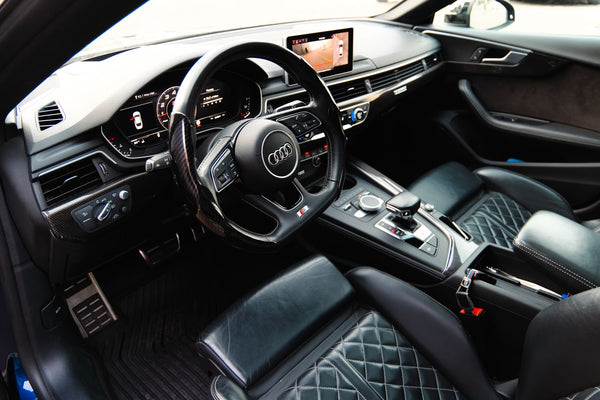
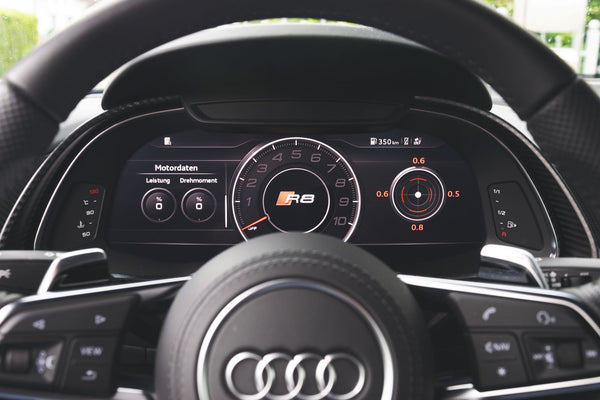
Two steering wheels can look alike and still belong to very different configurations. So the choice between original compatibility and retrofit is not made from a photo or a model name. It starts with the steering wheel family intended for your car, then with the equipment that has to be carried over.
What is original compatibility?
Original compatibility concerns a steering wheel family designed for the generation and configuration of your vehicle. The exact model, generation code, model year and steering wheel currently in place give the first clues. The photos then fill in the picture by showing the buttons, the paddles and the shape of the central module.
This approach prepares a configuration that keeps the equipment fitted to your car. Audio controls, phone, cruise control, paddles or heating are identified before manufacturing so that the choice of rim and finishes rests on a consistent base.
What does a steering wheel retrofit cover?
A retrofit applies when a project uses a different configuration from the one originally fitted. It requires looking at more than the exterior shape: connectors, fitted functions, airbag module, paddles and driving aids are among the elements to identify.
Capacitive hands-on detection deserves special attention, as it is part of the steering wheel. Lane-keeping functions, on the other hand, rely on the steering column or other vehicle components depending on the platform. Listing the equipment therefore gives the check a clear direction.
Good to know
In the usual setup, you keep your original airbag. Its shape, mounting points and family are checked with the rest of the steering wheel components.
What tells the two projects apart?
Start with the exact model and its generation. An Audi 8V and an Audi 8Y, a BMW F Series and a BMW G Series or the pre-facelift and facelift versions of the same model may have different controls and equipment. The year of first registration provides a clue, but the generation code and photos remain more precise.
The vehicle's VIN helps link this information to a specific car. Add a front photo of the steering wheel, a photo of each control block and a view of the paddles if fitted. Also mention heating and any driving aids that use hands-on detection.
Why aren't two similar steering wheels automatically interchangeable?
The design of the rim alone does not show the elements behind the steering wheel. The buttons may have a different layout, the paddles may be missing, or the connectors may belong to another configuration. The central module deserves the same attention, because its shape and its mounting points help define the steering wheel family.
This approach keeps the project from being reduced to a question of style. The aesthetic choices come once the base and equipment are identified. You can then choose the materials, the stitching, the inserts and the top marker with a clear view of the configuration to prepare.
How do you prepare your compatibility check?
Gather the information before choosing finishes. The check is clearer when vehicle data and visible equipment are presented together. You can then steer your project towards a suitable steering wheel family and build the materials, stitching and inserts around this base.
A clear request therefore brings together vehicle information and useful photos in one place. It lets the equipment be checked without relying on a single isolated detail. This is also a good time to flag the functions that matter to you in daily use, so that the chosen configuration includes them from the start.
The guide which steering wheel is compatible with your car details the method by brand and generation. To understand the airbag's role in the project, also read our article what happens to the airbag when changing the steering wheel. The guide to changing your steering wheel also covers lead times, manufacturing and the project steps.