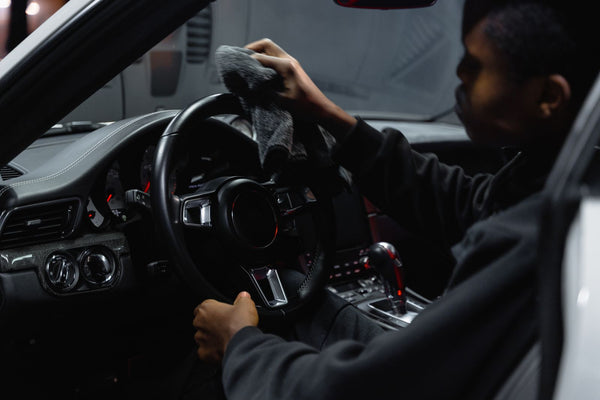
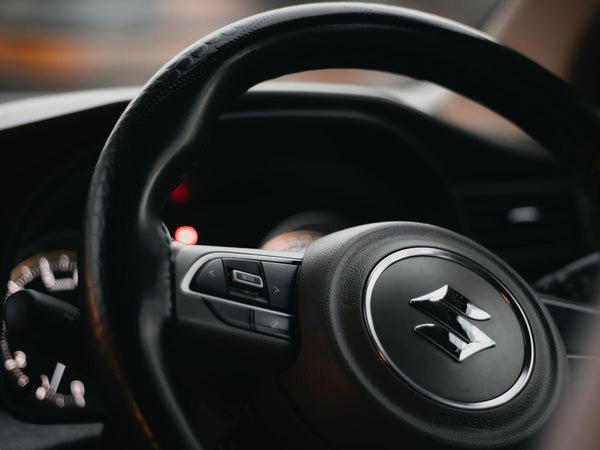
A black leather steering wheel and a black Alcantara steering wheel can look similar in a photo. In hand, the difference is immediate. Leather follows your movements with an even surface. Alcantara creates a velvety feel that stays noticeable under your fingers.
What feel do you want day to day?
Nappa leather is the most natural continuation of a factory leather-wrapped steering wheel. Its surface is supple, smooth or perforated depending on the finish, and suits very different uses. It works for an understated composition as well as for a project where stitching or carbon adds contrast.
Alcantara has a fibrous and velvety texture. It creates more contact on the sides of the steering wheel, where your hands rest most often. Many drivers choose it to give a weekend car or a sporty configuration a firmer grip.
| Criterion | Nappa leather | Alcantara |
|---|---|---|
| Feel | Supple and even | Velvety, with more grip |
| Suitable areas | Sides, top and bottom | Particularly the sides |
| Routine maintenance | Soft cloth, leather-appropriate method | Dusting and soft brush |
| Look | Understated or textured depending on perforation | Sporty and matte |
Where should you use leather or Alcantara?
The sides shape most of the feel, because that is where you hold the wheel. Smooth leather gives them a soft continuity. Perforated leather adds visual relief and a more pronounced texture. Alcantara puts its character where you feel it most.
The top and bottom then extend or contrast this choice. You can keep the same material on the entire rim, pair Alcantara sides with smooth leather, or frame the grip areas with carbon. The logic stays the same: feel first, then design.
What care should you plan for?
Leather requires gentle cleaning with a clean cloth and a product intended for this surface. Use only a little product, especially near the perforations. This routine helps keep the surface clean and even.
For Alcantara, the manufacturer recommends regular dusting with a soft brush or dry cloth. A slightly damp white cloth is sufficient for routine maintenance. Simple, regular care preserves the look of the fibers.
How do you create a coherent composition?
Choose a dominant material, then a single secondary material. For example, Alcantara sides and a smooth leather top give a balanced result. Perforated leather sides with a carbon top and bottom create a more technical look while keeping a soft grip.
The stitching and the top marker work best when they pick up a color already present in the cabin. A seat belt, a trim insert or the seat stitching is enough as a starting point. This repetition gives continuity to the configuration without overloading the steering wheel.
To explore every combination, see the guide what material to choose for your steering wheel. The guide to changing your steering wheel then explains manufacturing, lead times and the compatibility check.