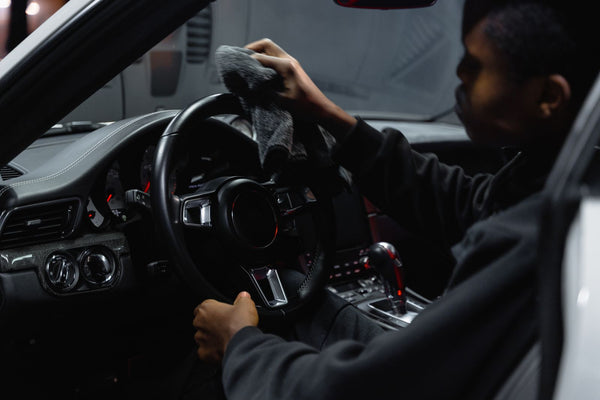
Alcantara or carbon: the question seems to pit two materials against each other, but they do not play exactly the same role on a steering wheel. Alcantara is mostly felt under the hands. Carbon is noticed first in the design of the rim. So a coherent configuration starts with your priority: the feel of the grip areas or the visual effect in the cabin.
What is the difference between Alcantara and carbon on a steering wheel?
| Criterion | Alcantara | Carbon |
|---|---|---|
| Main role | Feel and grip | Pattern and visual contrast |
| Frequently chosen areas | Sides of the rim | Top, bottom, or inserts |
| Look | Matte and velvety | Regular woven or freer forged |
| Maintenance | Dusting and appropriate cleaning | Gentle cleaning of the finished surface |
| Indicative Apex lead time | About 4 weeks | About 4 to 6 weeks |
This comparison does not indicate that one material is superior to the other. It helps you decide where to place each finish. If you mainly hold the steering wheel on the left and right, the sides directly influence the driving feel. The top and bottom remain more visible when you look at the interior or when the steering wheel is straight.
Our guide for choosing the material of a steering wheel also compares nappa leather. Here, the choice is only between Alcantara and carbon, for a direct comparison.
When should you choose Alcantara?
Alcantara suits you if you want a matte, velvety surface that you feel more under your fingers. It naturally finds its place on the sides, as these are the areas most often held. A full Alcantara configuration is possible, but the grip areas alone are enough to give the steering wheel its tactile character.
For daily use, the choice should factor in care. Over time, hands leave dust and skin oils on the fibers. Regular dusting with a soft brush or a clean cloth helps preserve their appearance. Light, frequent care is better than soaking the material in one overdue clean.
Alcantara can also tie in with an interior that already has matte surfaces, sports seats, or textile inserts. Look at the actual color of these elements in daylight. Two similar blacks in a photo can reveal a different shade once placed side by side.
When should you choose carbon?
Carbon suits you if you want to give the steering wheel visual structure. Placed on the top and bottom, it highlights the shape of the rim without taking up the main grip areas. Its pattern draws more attention than that of a plain surface, especially in a dark interior.
Apex Studio offers 3K woven carbon and forged carbon. The first has a regular pattern. The second creates a freer design. This choice is about looks, not a promise of mechanical performance for the steering wheel. The guide woven or forged carbon details this difference.
The area covered matters as much as the pattern. A limited insert provides a subtle accent. An upper section and a lower section in carbon create a stronger presence. Before deciding, look at the inserts on your dashboard, console, and door panels. The steering wheel can follow their design logic or deliberately become the focal point of the cabin.
Can Alcantara and carbon be combined?
Yes. The clearest combination keeps Alcantara on the sides and places carbon on the top and bottom. Each material then has a clear role: contact under the hands on one side, visual structure on the other. This split means no single material has to meet every expectation.
Start by choosing the dominant material. Then add a single color accent, for example, the stitching or the 12 o'clock marker. If the carbon already has a strong pattern, adding more colors can make the composition harder to read. A shade picked up from the seats, the seat belts or the calipers usually creates a more coherent link.
The guide on the distribution of materials by area helps to prepare this composition. You can then compare two variants in the configurator, with the same angle and the same colors, so that you see only the effect of the material change.
What should you choose for a steering wheel used every day?
For everyday use, start from your actual habits. If you want a more pronounced grip and are happy with regular care, Alcantara on the sides is a logical option. If you prefer to keep a more classic surface under your hands while adding contrast, carbon can stay limited to the upper and lower parts, combined with leather on the sides.
The cabin temperature, frequency of use, and the way you maintain the car also matter. A material chosen solely from a photo can disappoint if its maintenance routine does not match your usage. The right project is one whose look and constraints still make sense after the first few weeks.
What lead time should you expect at Apex Studio?
A leather or Alcantara configuration takes about four weeks to make. When it includes woven or forged carbon, allow about four to six weeks. Carbon adds application, finishing and polishing steps. So the lead time depends on the chosen composition, not just the brand of the car.
Each Apex steering wheel is built to order. Your current steering wheel stays in the car during production. The equipment, the steering wheel family and the parts to carry over must be checked separately from the choice of materials.
How do you decide before ordering?
First photograph the interior from the driver's seat and from the open door. Note the materials already present, the dominant colors, and the areas that catch the eye. Then choose your tactile priority, followed by your visual priority. This method limits contradictory decisions.
If feel comes first, start with Alcantara on the sides. If the pattern comes first, decide how much carbon you want. If both matter, distribute them by zone and keep the other details more understated. Check the materials page, then open the configurator to visualize your custom steering wheel.